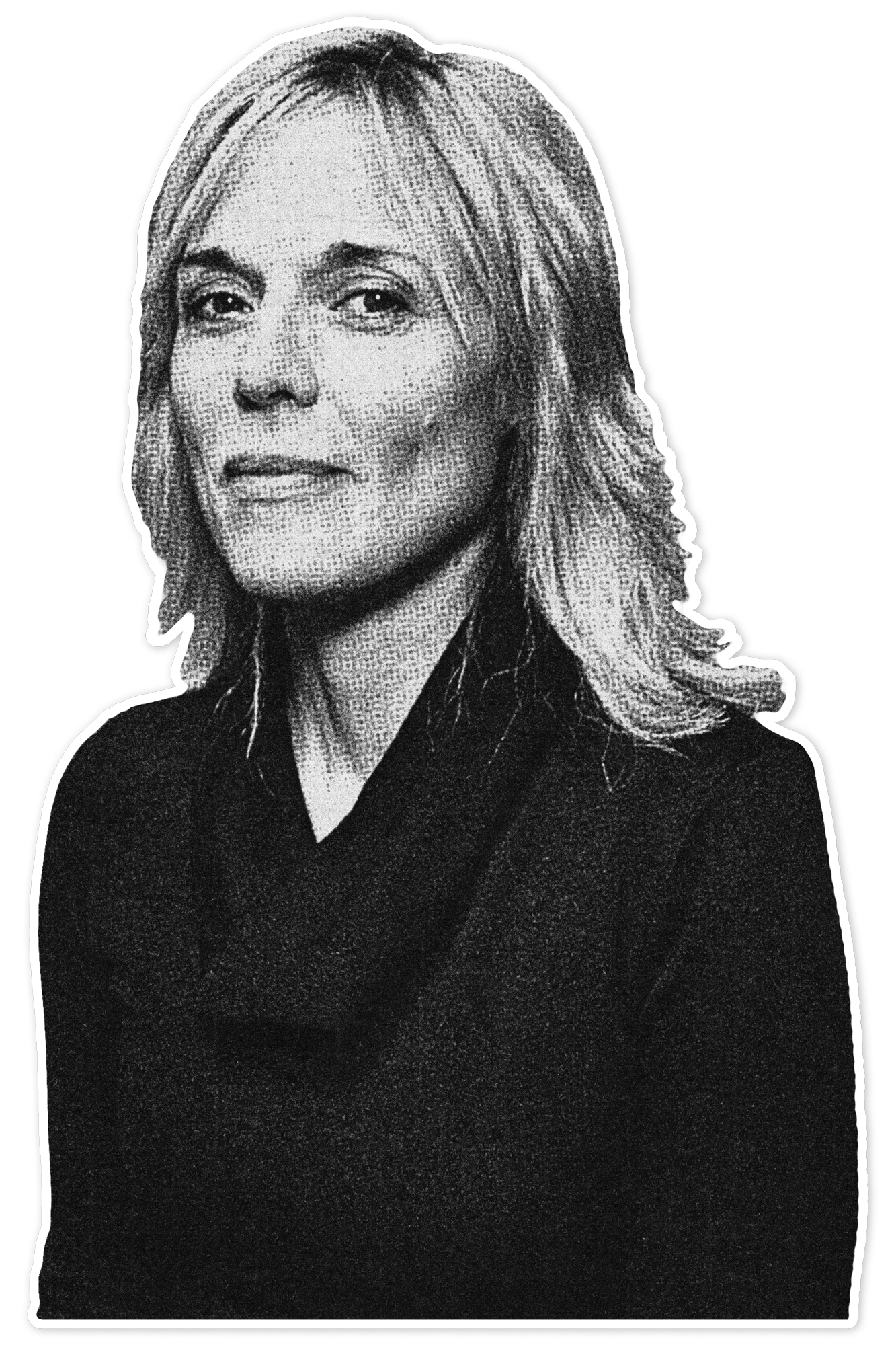
2018 Conference Opening Address
First I would like to welcome all of you to the 11th Annual Theology & Peace Conference: “Accepting the Invitation to the Beloved Community.” Please join me in thanking our hosts, American Baptist College, especially Dr. Forrest E. Harris, Ms. Mary Carpenter, and Mr. Joseph Tribble . I would also like to thank the Raven Foundation and Imitatio for their generous financial support without which this conference would not be possible.
Last year Theology & Peace celebrated its 10th Anniversary Conference, “Embracing We-Centricity: Practices that Nurture the Common Good.” With the growing divisions and the escalation of conflict, we recognized that we need to equip ourselves with spiritual practices that transcend the political rivalry and the polarizing rhetoric poisoning this nation.
Those of you familiar with Mimetic Theory, and its origins in René Girard’s insights regarding human nature and the origins of sacrificial violence, recognize it has a powerful intellectual tool for understanding human relations and the construction of human culture. No matter how much we may try to behave otherwise, human individuals are not autonomous, but are in fact inescapably connected. We are wired for community. The neuroscientist Vittorio Gallese who finds a connection between his work and Mimetic Theory, writes, “…every time we relate to other people, we automatically inhabit a we-centric space within which we exploit a series of implicit certainties about the other. This implicit and pre-theoretical, but at the same time contentful state enables us to directly understand what the other person is doing, why he or she is doing it, and how he or she feels about a specific situation.” According to Girard, the most immediate and significant connection we have with others is our pre-rational imitation of each other’s desires and emotions - Girard labels this mimesis.
The question then becomes, what sort of communal space are we inhabiting. Theory will only take us so far, at some point we must work this out in the lived experience of our “interdividuality,” in community. Which leads me to Martin Luther King Jr. I don’t know if King ever encountered René Girard or Mimetic Theory, but I do know that King understood just how interconnected we are, that this remains true despite the many cruel and violent ways we attempt to deny it.
King writes in his sermon, “The man who's was a fool,” In a real sense, all life is interrelated. All men are caught in an inescapable network of mutuality, tied in a single garment of destiny. Whatever affects one directly affects all indirectly. I can never be what I ought to be until you are what you ought to be, and you can never be what you ought to be until I am what I ought to be.
In the forward to King’s book of collected sermons, Strength to Love, his wife Coretta says that his “theological belief in the interdependence of all life inevitably led to methods for social change that dignified the humanity of the social change advocate as well as his adversary.” This ethos of respecting your adversary, an ethos King not only preached, but more importantly lived and breathed, is one we sorely need today.
King has been gone fifty years. In the film we will later, King the Wilderness, we will hear stories from those who knew him and worked with him. In their testimonies we feel the impact that King had on those around him. I haven’t seen this film, but based on all that I have read and seen about King, I’m certain we will be affected by the mimetic power of his person, filled as it was with a passion for the Beloved Community.
Some will say that King did not realize that dream in his lifetime, We may not realize it in our lifetimes. Nevertheless, we will succeed to whatever extent we live into King’s dream during our time here at American Baptist College. We cannot help but have an affect on each other. Some of you may recall, at last year’s conference we announced the theme and location for this year. We had intended to hold the 2018 Theology & Peace Conference at the Scarritt Bennett Retreat Center adjacent to Vanderbilt. And the theme we proposed was “Finding ourselves in ‘ch-other”. ‘Ch-other is a neologism coined by David Dark. Discussing possible speakers. Dr. Forrest E. Harris, president of American Baptist College, was the first person we approached. We had heard that Dr. Harris, like King, is a leader of moral conscious able to rise above the rhetoric of scapegoating and the rising tide of exclusive politics, to welcome the other.
Upon receiving our invitation to speak, Dr. Harris reciprocated with a better invitation: he asked that we hold our conference at American Baptist College. After visiting our website and finding there an image of Martin Luther King, Jr., he suggested we come to ABC to commemorate the fiftieth anniversary of King’s death. Last September, when the Theology & Peace Board visited this campus, we were affected by the warm welcome we received and a mutuality, which was quickly evident. Leaving, we couldn’t shake the feeling that we had been called to center the conference around King’s vision of the Beloved Community. Before the day was out, the board decided to accept Dr. Harris’ invitation.
Of course, this meant we had to change the conference theme. Don’t worry, we’re saving ‘“ch-other” for another year, and we plan to ask David Dark to join us. With our new sense of purpose, we quickly identified the other speakers to invite: Rev. Dr. Thee Smith teaches Religion at Emory was a founding member of the Colloquium on Violence & Religion, the academic association dedicated to Girard’s Mimetic Theory. He is a cofounder of Southern Truth & Reconciliation. Thee also gives workshops on the Beloved Community.
Becca Stevens is the founder of Thistle Farms. Opening a sanctuary where she is lives in loving community with survivors of sex trafficking, Becca is incarnating the Beloved Community.Rev. Jeannie Alexander, director of No Exceptions Prison Collective which advocates for the incarcerated individuals and their families — she is also a co-founding resident of Harriet Tubman House, an interfaith community dedicated to restorative practices in earth stewardship and human rights.
All of our speakers are incarnating King’s vision, nurturing the Beloved Community, sometimes in the most unlikely places…. And in the process proving that our interconnectedness, our “interdividuality,” (Girard’s neologism to describe inescapable condition of all human life) is the only means by which we may transform of our communal space.
Susan Wright
President, Theology & Peace
2018 Theology & Peace Conference
Accepting the Invitation to the ‘Beloved Community’
American Baptist College
Nashville, Tennessee