

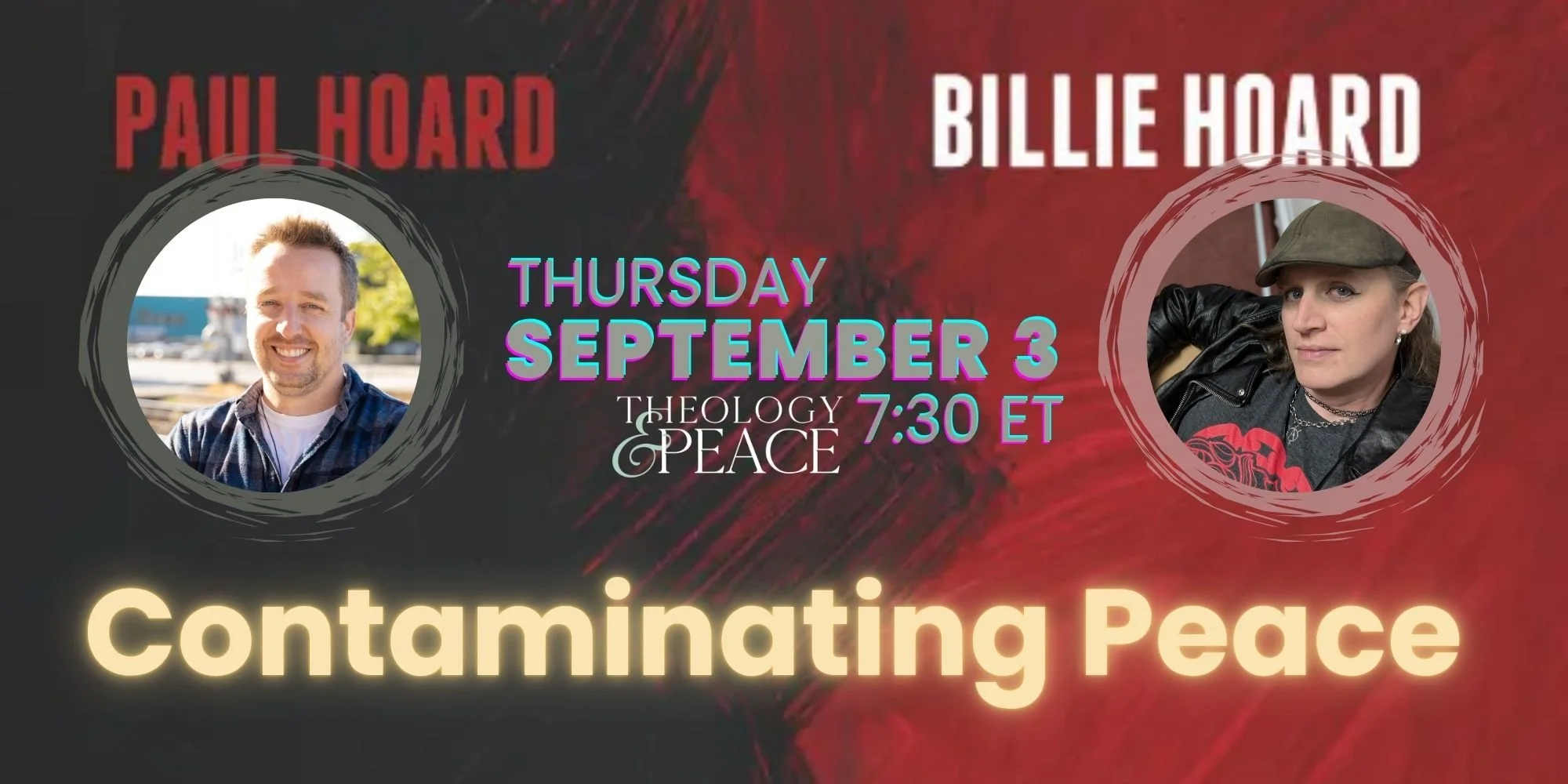
Too many theological accounts of peace treat violence as a contaminant to be held off — by walls, by just war doctrine, or by empires that promise safety in exchange for loyalty. Paul Hoard and Billie Hoard turn that logic inside out. Drawing on their concept of eucontamination, they argue that shalom itself functions as a contaminant: it does not stay comfortably separate from violence, but infects the systems, loyalties, and comforts built to manage it.
Real peace, on this account, is not mere conflict avoidance or the preservation of order; it is the condition in which all is finally made right — a shalom inseparable from justice, and secured only through a love that refuses to exempt either enemy or neighbor. That is what makes it dangerous rather than comforting: it cannot be achieved by distance, defense, or the selective mercies empire is willing to grant.
True Peace is messy and requires contact, a willingness to let go of the securities violence and empire promise. It unsettles precisely because it will not settle for anything less than everything set right. Paul and Billie trace what this means for how Christians imagine their relationship to power, protection, and the violence so often required to preserve both.
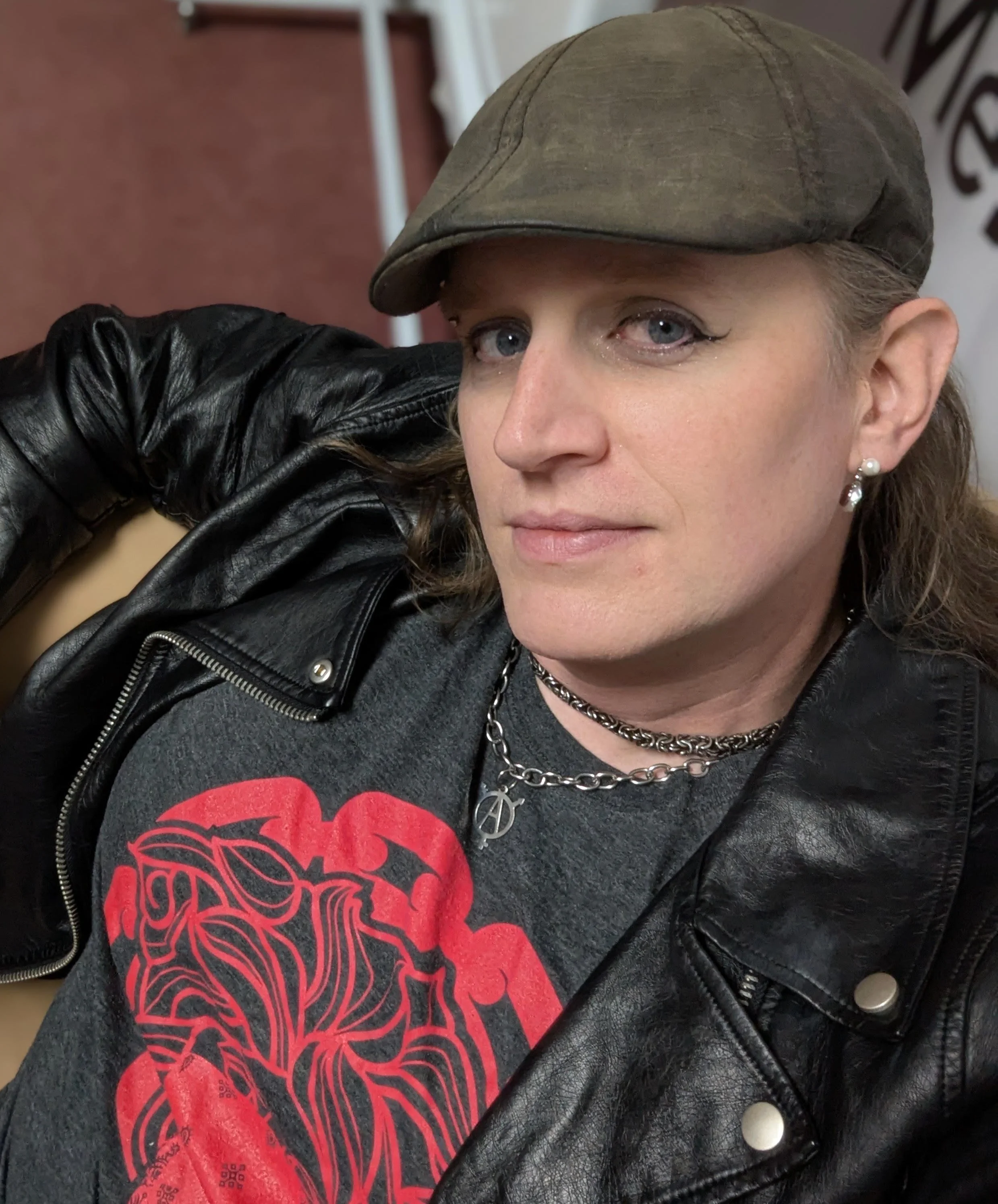
Billie Hoard is a trans woman, a high school history teacher, an author, and something of an Anabaptist radical. A consummate generalist, she holds an MA in liberal arts from St. John’s College in Annapolis, Maryland, and she writes on topics ranging from fairy tales and C. S. Lewis to theology and philosophy. She and her brother, Paul Hoard, are the authors of Eucontamination: Disgust Theology and the Christian Life.

Paul Hoard, PhD, LMHC, is a licensed counselor, psychoanalytic psychotherapist, and associate professor of counseling psychology at The Seattle School of Theology and Psychology, as well as a board member for the Center for Christianity and Psychoanalysis. His scholarship focuses on Lacanian psychoanalytic theory, sexuality, white-body supremacy, perpetration-induced traumatic stress, and the theological logic of disgust. He has spoken and published internationally on topics including purity culture, trauma, eucontamination, and the intersections of theology and psychoanalysis. In addition to his academic and clinical work, Dr. Hoard is a co-founder and Chief Strategy Officer of Praxplay, an AI-powered training platform designed to help counseling students develop clinical skills through simulated client interactions. He is the co-author, with his sister Billie Hoard, of the book Eucontamination: Disgust Theology and the Christian Life.